
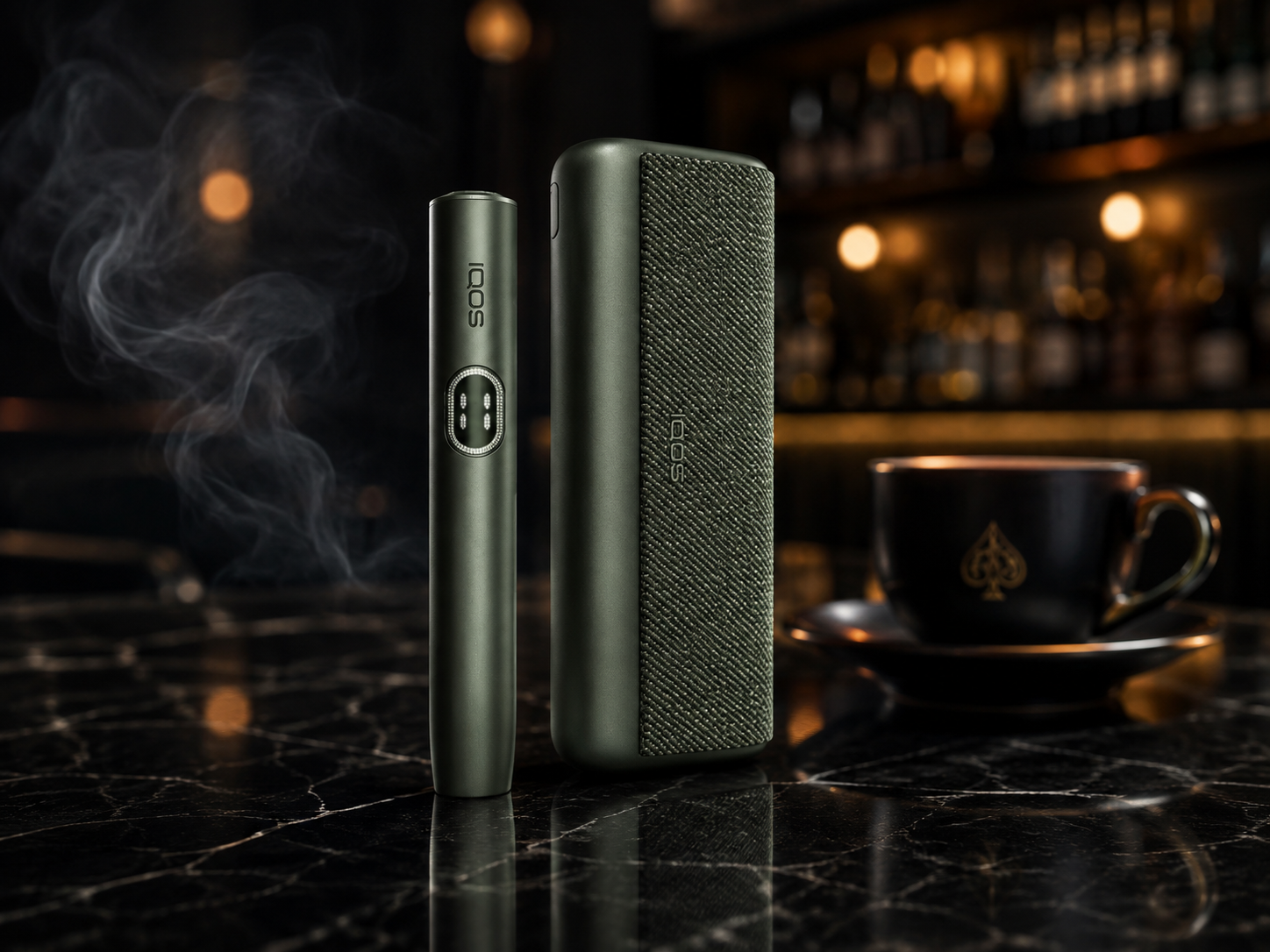
For users comparing modern heated-tobacco hardware with older blade-based systems, the most important change is not cosmetic. IQOS ILUMA moves the heating element away from the device and into the specially engineered TEREA stick, using the SMARTCORE INDUCTION SYSTEM™ rather than a physical blade. That architectural decision affects maintenance, handling, consistency, and the overall rhythm of everyday use. The official IQOS documentation describes the ILUMA family as a blade-free platform designed specifically around TEREA sticks, making the relationship between device and consumable fundamentally different from earlier generations. оригинальный IQOS ILUMA is therefore best understood not simply as another hardware revision, but as a redesigned operating ecosystem.
The practical appeal of this approach becomes especially clear after repeated use. Traditional blade-based heated-tobacco devices can accumulate tobacco particles around the heating element, creating an additional maintenance routine. ILUMA’s induction architecture removes that exposed blade from the holder, while TEREA sticks incorporate the metallic heating component internally. This design substantially simplifies maintenance and reduces the amount of residue that can accumulate inside the holder during normal use.
The Key Engineering Change Is Hidden Inside the Stick
The most interesting component of the ILUMA ecosystem is not immediately visible. Instead of inserting a tobacco stick onto a blade, the system creates an electromagnetic heating process around a metal element contained inside the TEREA stick. The device detects the compatible stick and activates the heating sequence without requiring a physical heating blade to penetrate the tobacco material. This creates a different mechanical relationship between hardware and consumable.
That distinction matters because fewer exposed mechanical components means fewer parts directly interacting with tobacco residue. The result is a cleaner internal environment and a design that places greater emphasis on controlled interaction between the holder and the engineered stick. TEREA is therefore not a generic consumable for the ILUMA platform; it is an integral part of the operating architecture.
A Daily Routine With Far Less Maintenance Friction
Maintenance is one of those details that rarely appears exciting on a specification sheet but becomes highly noticeable after weeks of ownership. Earlier blade-based systems could require regular cleaning to remove accumulated tobacco particles. With ILUMA, the absence of the blade substantially reduces that recurring task.
- Blade-free holder architecture reduces direct contact between the heating mechanism and tobacco.
- TEREA contains the internal metallic heating element required by the induction system.
- The holder is designed around minimizing tobacco residue during normal operation.
- The simplified internal structure reduces the number of routine maintenance steps compared with blade-based generations.
This should not be interpreted as literally maintenance-free ownership. Exterior surfaces, charging equipment, and general device hygiene still deserve sensible care. The important lifestyle benefit is that one of the most repetitive maintenance tasks associated with earlier heated-tobacco hardware becomes much less significant.
Structural Reliability Starts With Removing the Exposed Blade
A mechanical blade introduces a physical point of interaction that can be vulnerable to bending, contamination, or accidental damage. ILUMA’s architecture eliminates that particular component from the holder. The result is a less mechanically exposed heating system, although real-world durability naturally depends on handling, charging habits, and the specific model.
From an engineering perspective, the advantage is straightforward: the heating element no longer needs to be repeatedly inserted into tobacco material. Instead, it remains integrated into the stick while the device supplies the induction energy required for heating. That changes the wear pattern of the system and removes one of the more delicate components found in legacy blade designs.
Compatibility Is Part of the Reliability Equation
The same specialization that improves the architecture also creates an important limitation. TEREA sticks are designed specifically for ILUMA, while older HEETS-style sticks are associated with blade-based IQOS generations. The ILUMA platform is designed to recognize compatible TEREA sticks, making the correct consumable an essential part of the system.
For consumers, this means the ecosystem should be considered as a complete hardware-and-consumable platform rather than a universal accessory system. The engineering benefits depend on using the components for which the induction architecture was developed.
Why the Sensory Experience Feels More Controlled
Hardware design alone does not determine flavor, but it strongly influences how consistently a consumable is heated. TEREA sticks are constructed with several internal sections, including processed tobacco, a heating element, a hollow channel, sealing components, and a cooling segment. The purpose of this internal arrangement is to manage how tobacco aerosol travels through the stick and reaches the user.
The hollow channel is particularly relevant to the sensory experience because it helps regulate aerosol flow, while the cooling segment moderates temperature before the aerosol reaches the mouth. This combination is intended to create a steady draw and repeatable delivery rather than relying on a simple heated tobacco plug.
That internal optimization also explains why the experience can feel more consistent from session to session. The consumable itself is engineered as part of the heating system, so the device does not have to compensate for an exposed blade penetrating different portions of the tobacco material each time.
TEREA Turns Flavor Selection Into a Structured Sensory Palette
The TEREA range is broader than a single tobacco profile. Depending on availability, the collection can include roasted and balanced tobacco blends, woody and nutty profiles, herbal accents, menthol sensations, fruit notes, and capsule-based combinations. This gives users a more structured way to choose a sensory profile according to personal preference.
- Amber emphasizes toasted tobacco alongside woody and nutty nuances.
- Yellow provides a milder, aromatic tobacco profile with zesty notes.
- Turquoise combines lightly toasted tobacco with pronounced cooling and citrus-like accents.
- Sun Pearl combines tobacco and herbal notes with an exotic-fruit capsule profile.
- Twilight Pearl combines toasted tobacco with berry-oriented notes and a cooling capsule experience.
These descriptions are useful as a flavor map rather than a promise that every user will perceive identical notes. Aroma perception is highly individual, and the same profile can appear softer, sharper, sweeter, or more aromatic depending on personal sensitivity and the way the session is used.
Consistency Comes From the Consumable as Much as the Device
One of the strongest characteristics of the ILUMA concept is the degree of integration between hardware and stick. TEREA is manufactured specifically for the induction system, with tobacco selection, blending, assembly, and production controls designed around consistent product construction.
For the user, that translates into a predictable operating sequence: insert the compatible stick, allow the device to activate its heating system, use the session, and remove the stick afterward. There is less interaction with the internal mechanism and fewer opportunities for residue to become part of the daily routine.
Reduced Aroma Footprint Is a Practical, Not Absolute, Benefit
Heated-tobacco products should not be confused with odorless products. TEREA still produces tobacco-containing aerosol with recognizable aromatic characteristics. However, the absence of combustion changes the character of the experience compared with conventional cigarette smoke, while the controlled internal design influences how the aerosol is generated and cooled.
For lifestyle use, this can translate into a significantly reduced aroma footprint in comparison with conventional cigarette smoke, although the exact perception depends on ventilation, surroundings, the selected TEREA variant, and individual sensitivity. Flavor-forward products containing menthol, fruit, or aromatic components can also create a noticeably different ambient impression from traditional tobacco blends.
Modern ILUMA Models Push the Convenience Concept Further
The ILUMA family extends the underlying induction architecture with additional convenience features. Depending on the model, the range can include touch controls, Pause functionality, FlexBattery, FlexPuff, AutoStart, and support for multiple consecutive sessions. These features are designed to give users greater control over how individual sessions are managed.
These additions do not fundamentally change the induction principle, but they refine how the user interacts with it. The result is an ecosystem increasingly focused on reducing small interruptions: fewer cleaning steps, fewer mechanical concerns, simpler stick insertion, and more automated control over the session.
The Real Upgrade Is the Elimination of Small Everyday Frictions
Viewed purely as consumer hardware, IQOS ILUMA is interesting because its advantages are cumulative rather than dependent on one dramatic specification. The blade-free architecture simplifies internal maintenance. The integrated heating element changes the mechanical relationship between stick and holder. The engineered TEREA structure helps manage aerosol flow and cooling. The flavor range gives users multiple sensory directions, while newer ILUMA models add additional interaction and battery-management features.
There are still meaningful limitations. TEREA compatibility is restricted to the ILUMA ecosystem, nicotine remains addictive, and heated-tobacco products are not risk-free. The technology should therefore be evaluated as an alternative nicotine-delivery format, not as a harmless consumer gadget.
From a purely technical and usability perspective, however, the ILUMA architecture represents a coherent redesign rather than a cosmetic refresh. Its biggest practical achievement is reducing the number of small maintenance and handling decisions that accompany everyday use. By moving the heating element into the consumable and optimizing the internal core around controlled induction, the platform creates a cleaner mechanical workflow, more predictable sensory delivery, and a noticeably less maintenance-intensive ownership experience than legacy blade-based systems.